Rethinking Professional Networking as an Introvert
Introverts often view networking with hesitation because traditional advice emphasizes high-energy, crowded events, loud speed-networking sessions, and aggressive self-promotion. For candidates in competitive job markets across India and globally, this high-friction approach leads to rapid social fatigue and limited results. Fortunately, effective professional networking does not require transforming into an extrovert. In modern hiring workflows, targeted, low-friction interactions and strategic relationship building consistently outperform transactional, high-volume outreach.
Modern job search strategies prioritize depth over breadth, allowing quiet professionals to stand out through thoughtful preparation, deep analytical skills, and tailored communication. To succeed without social exhaustion, introverts must reframe what networking actually means. It is not about collecting business cards or making forced small talk with dozens of strangers in a noisy conference hall. Instead, job search networking for introverts is about establishing meaningful, one-on-one connections with hiring managers, recruiters, and prospective teammates who share similar professional interests.
When you focus on structured research, active listening, and providing mutual value, networking becomes a manageable research process rather than a draining social performance. Furthermore, digital transformation in recruitment has shifted the balance in favor of introverts. Asynchronous communication methods, structured discovery platforms, and analytical workspace tools allow candidates to engage thoughtfully on their own schedule. By focusing on quality outreach aligned with genuine job fit, introverts can construct a high-converting job search strategy that respects their energy levels while delivering steady career progress.
Core Networking Principles for Quiet Professionals
Focus on 1-on-1 asynchronous interactions rather than large group events.
Research decision-makers thoroughly before reaching out with targeted inquiries.
Lead with valuable insights or thoughtful questions about mutual technical challenges.
Organize application materials centrally before initiating contact.
Set realistic daily goals for outreach to protect cognitive bandwidth.
Asynchronous Networking: Leveraging Digital Channels and Tailored Content
For introverts, real-time networking events can feel overwhelming, but asynchronous communication provides the control and breathing room needed to craft thoughtful messages. Asynchronous networking involves connecting with peers and recruiters through written communication, shared project portfolios, and targeted digital interactions that do not require instant real-time responses.
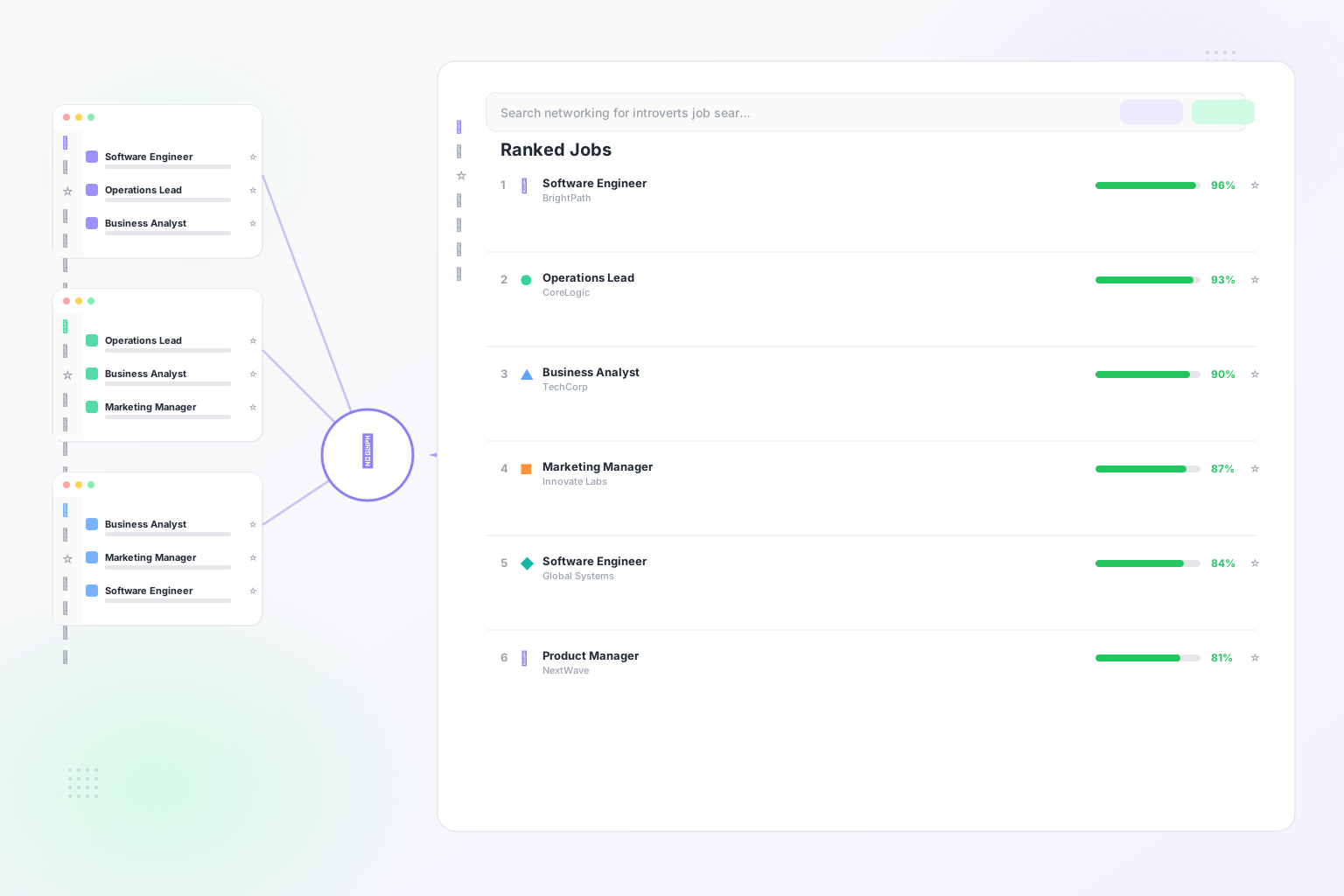
A key challenge in any job search is deciding where to focus limited social energy. Mass messaging hundreds of strangers often yields low response rates and high mental fatigue. A far more strategic approach involves using a unified job discovery workspace to filter opportunities based on deep profile match scores before initiating contact. When you evaluate positions through ranked feed matches tailored to your specific technical skills and career background, your networking outreach becomes instantly relevant.
Additionally, paying attention to applicant competition signals offers crucial context for your networking efforts. If a job posting shows rapid applicant volume—sometimes exceeding 100+ applicants within hours—a cold application alone may get buried in candidate pools. In these high-competition scenarios, introverts can strategically deploy targeted, low-stress written outreach to internal team members or key decision-makers. Sharing a concise note that highlights a shared technical challenge or references a recently published company initiative allows you to build organic rapport without appearing pushy or desperate.
4-Step Low-Friction Outreach Framework
- 1
Identify High-Match Roles
Filter ranked feed opportunities based on skill alignment and review applicant competition signals.
- 2
Tailor Application Materials
Adjust your résumé to match job description keywords and verify your live ATS score before reaching out.
- 3
Send Structured Asynchronous Messages
Reach out to relevant hiring contacts with concise, context-driven notes highlighting mutual technical topics.
- 4
Log Outreach in Your Pipeline
Record interactions, saved résumé versions, and response status in a central job search workspace.
Systematizing Your Job Search Pipeline to Avoid Burnout
Job search fatigue hits introverts particularly hard when application processes are chaotic and scattered across multiple portals, spreadsheets, and communication channels. Switching back and forth between different platforms while trying to remember which custom résumé was submitted to which team drains cognitive bandwidth. To preserve mental energy for high-impact activities like tailored messaging and interviews, candidates need a systematic, single-pipeline workspace.
Systematizing your pipeline starts with centralizing every phase of your search—from initial job discovery to final interview prep—in one unified tracking board. When you decide to apply for a role, matching your résumé specifically to the job description creates immediate clarity. Utilizing live applicant tracking system (ATS) scores for each customized application ensures that your résumé highlights the exact keywords and competencies required by the employer before you submit.
Equally important is keeping track of every customized résumé version associated with each specific role. When a hiring manager or internal contact responds to your asynchronous networking message weeks later, you should never have to guess which variation of your background they are viewing. Maintaining an organized record of customized résumé versions and application notes allows you to re-engage with potential employers calmly and confidently. By automating administrative overhead and centralizing your tracking pipeline, you convert a chaotic job hunt into a manageable, step-by-step workflow.
Stay Updated
Get the latest career insights and job search tips delivered to your inbox.
We'll only email you about new blog posts. Unsubscribe any time.
Low-Stress Interview Preparation and Strategic Follow-Ups
Transitioning from asynchronous networking to live interviews is often the most anxiety-inducing stage for introvert job seekers. However, interviews do not require off-the-cuff charisma or aggressive persuasion; they reward thorough preparation, structured problem-solving, and calm, active listening.
To lower stress levels during interviews, approach the conversation as an information-gathering exercise rather than an interrogation. Introverts naturally excel at listening carefully and synthesizing complex details. By coming prepared with insightful, targeted questions about team dynamics, project workflows, and technical challenges, you shift the dynamic from a one-sided evaluation to a collaborative professional discussion.
Organization plays a vital role during the interview prep stage. Reviewing the exact job description, your tailored résumé version, and your preliminary application notes in one central workspace ensures you enter the meeting fully aligned with what the team needs. Practicing structured response frameworks—such as outlining specific challenges, actions, and quantitative results—allows you to articulate your achievements clearly without feeling like you are over-boasting. Following up after the interview with a brief, reflective thank-you note that references a specific point discussed during the call reinforces your attention to detail and reinforces the positive direct connection you built.
Frequently asked questions
How can introverts network for jobs without attending crowded events?
Introverts can build highly effective professional networks by prioritizing asynchronous, one-on-one communication over high-pressure events. Focus on reaching out to industry peers, alumni, or hiring team members through short, personalized written messages. Sharing technical insights, commenting thoughtfully on industry discussions, and requesting brief informational chats allow introverts to establish authentic professional relationships without experiencing social exhaustion.
Should introverts reach out to hiring managers directly during a job search?
Yes, direct outreach to hiring managers or potential teammates can be highly effective, especially for competitive roles that receive hundreds of applications. However, outreach should be targeted and high-quality. Before sending a message, ensure your skills closely align with the job description and that your résumé is tailored to the role. Keep your communication brief, polite, and focused on how your specific experience addresses a key challenge the team is currently facing.
How does tailored application tracking reduce job search fatigue for introverts?
Scattered job searches across multiple spreadsheets and job portals create high mental clutter and decision fatigue. Centralizing your entire job search into a single pipeline—where you can discover matched opportunities, tune résumés to ATS standards, store version histories, and track application stages—allows introverts to maintain structure and conserve mental energy for strategic networking and interview preparation.
Run your job search in one workspace
Find roles ranked to your profile, tailor your existing resume for each job, score ATS fit, and track applications — free to start.